UNC–Chapel Hill · College of Arts & Sciences · Dept. of Asian & Middle Eastern Studies ConnectCarolina · Accessibility
Fall 2026 & Spring 2027 Enrollment

Doing. Becoming. Belonging.

học-hành · trưởng thành · nối kết

Six courses, one small close-knit program: from your first "xin chào" to advanced seminars in Vietnamese history and culture — taught by faculty who study how language learning changes who you become.

VIET 204 Community & Diaspora — Spring
VIET 305 Arts, Cinema & Creative Expression — Spring
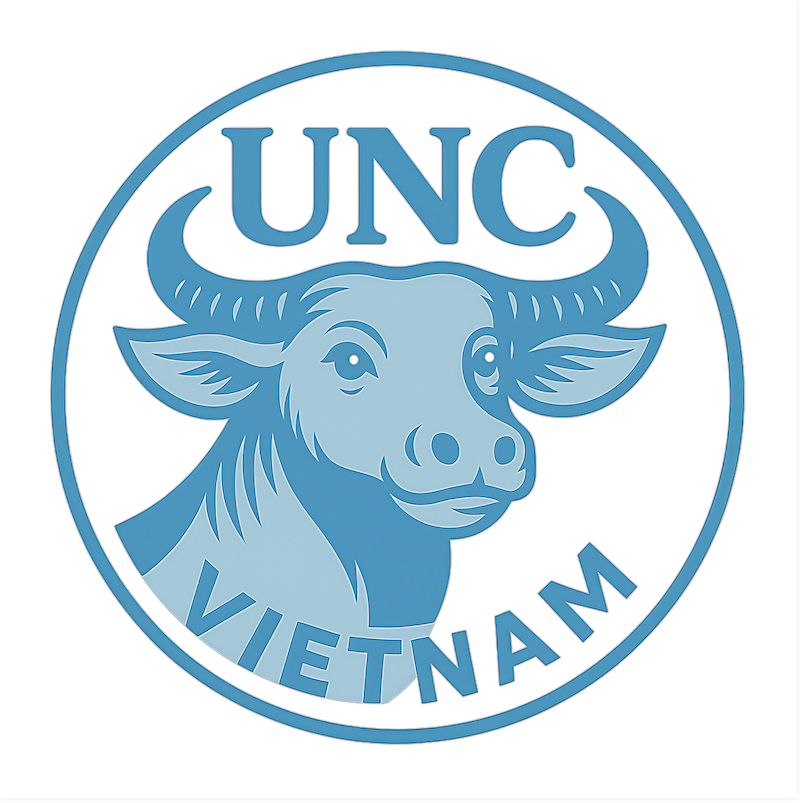
UNC Vietnamese buffalo seal mascot

Spring 2027 enrollment is open. VIET 204: Intermediate Vietnamese II — Community and Diaspora, and VIET 305: Advanced Vietnamese — Arts, Cinema, and Creative Expression, the program's first-ever advanced offering.

Register on ConnectCarolina →
About the Program

Why Vietnamese @ UNC?

Vietnamese is the language of over 100 million people worldwide — and of more than 20,000 of your neighbors right here in North Carolina.

Whether you're drawn by family heritage, career goals, a love of Vietnamese culture, or simply the challenge of a new language, UNC Chapel Hill offers a supportive, research-informed path to real proficiency.

Vietnamese is written in Quốc Ngữ — a Romanized alphabet where diacritical marks indicate both tone and vowel quality. While tones take practice, Vietnamese grammar is elegantly streamlined: words never change form for tense, person, or case. Its vocabulary reflects a layered history — Austroasiatic roots, centuries of Chinese literary influence, and a modern lexicon shaped by French colonialism and global contact.

The UNC Vietnamese Language Program fosters real-world proficiency and humanistic growth, teaching not just what students can do in Vietnamese, but who they can become through it. We serve as a vital hub of connection and belonging for all whose lives touch Vietnam.

Doing · Becoming · Belonging

01 — Doing

Task-Based & Real-World Proficiency

We equip learners with the communicative tools to navigate authentic situations with confidence — engaging in meaningful tasks and real-world projects from day one.

In practiceTask-based learning, authentic media, interactive communication, functional fluency.
02 — Becoming

Humanistic Growth & Critical Empathy

Learning Vietnamese is a transformative journey beyond vocabulary and grammar — cultivating critical thinking, cultural humility, and intercultural agility.

In practiceReflective storytelling, engagement with history and culture, identity exploration.
03 — Belonging

Community, Diaspora & Connection

Language is a bridge to community. We welcome heritage learners, non-heritage students, the local diaspora, and global partners alike.

In practiceHeritage language support, community-engaged projects, cultural events.

Not sure where to start? New students with no background can enroll directly in VIET 101 each fall. Everyone else takes a placement test.

Placement & Credit →
Enrollment

Courses & Sequence

All six courses are approved and listed in the catalog, taught in person by Dr. Huy Phung, open to students at every level. Placement determines your starting point.

Typical Course Path

101Elem. I
Fall
102Elem. II
Spring
203Inter. I
Fall
204Inter. II
Spring
305 / 306Advanced, theme-based
Fall or Spring

VIET 101–204 are sequential. VIET 305 and 306 are theme-based advanced courses that may be taken in any order, or independently once 204 is complete. Placement may allow you to enter at 102, 203, or higher. Take the placement test →

Minor Credit

VIET 204 and VIET 305 both count toward the Southeast Asian Studies minor. Coming soon: VIET/ASIA 324 — Vietnamese Foodways: History, Identity & Globalization (scheduling pending). Planned: VIET/ASIA 224 — Vietnamese Pop Culture. Any course taken after VIET 203 will also count toward a planned minor in Vietnamese, currently under development.

Fall 2026 Schedule

Term dates: August 17 – December 11, 2026 · All courses 3 credit hours · In person on campus

CourseTitleSecCRNDays & TimeStatus
VIET 101Elementary Vietnamese I19052MWF · 10:10–11:00 AMFull
VIET 101Elementary Vietnamese I21109MWF · 1:25–2:15 PMSeats available
VIET 203Intermediate Vietnamese I19689MWF · 12:20–1:10 PMWaitlist only

Register through ConnectCarolina. If your section is full, contact us about the waitlist.

Register on ConnectCarolina →

Spring 2027 Schedule

Term dates: January 6 – May 6, 2027 · All courses 3 credit hours · In person on campus

CourseTitleSecDays & TimeNotes
VIET 102Elementary Vietnamese II0019:05–9:55 AM—
VIET 102Elementary Vietnamese II00210:10–11:00 AM—
VIET 204Intermediate Vietnamese II—12:20–1:10 PMCounts toward SEAS minor
VIET 305Advanced Vietnamese I—1:25–2:15 PMFirst-ever offering · SEAS minor

Weekly Activities

🗣️

Vietnamese Language Circle

An informal weekly conversation hour open to students, community members, and anyone interested in Vietnamese language and culture — no enrollment required.

☕

Office Hours (Drop-in Café)

Meet with your instructors, ask questions, receive individualized support, and discuss coursework or language learning. Plus FLTA-led stories, crafts, and cultural activities.

Course Descriptions — Fall 2026

Descriptions for VIET 102, 204, 305, and 306 will be added when they're next offered (Spring 2027 and beyond).

VIET 101Elementary Vietnamese I3 credit hours

An introduction to modern standard Vietnamese. Students develop foundational skills in speaking, listening, reading, and writing, with an emphasis on everyday vocabulary and basic grammatical structures. Task-based activities ground learning in real communicative situations from the first week.

PrerequisiteNone — open to all OfferedFall InstructorDr. Huy Phung Gen-EdLanguageMaking Connections
VIET 203Intermediate Vietnamese I3 credit hours

Third semester of Vietnamese instruction. Students build on foundational structures, develop more complex grammar, and practice extended reading, writing, and conversation. Authentic texts and media introduced at this level.

PrerequisiteVIET 102 OfferedFall InstructorDr. Huy Phung Gen-EdLanguage (GLBL-LANG)Making Connections
Getting Started

Placement & Credit

Who needs placement? If you have any prior knowledge of Vietnamese — home use, high school study, self-study, or exchange — you must take the departmental placement test before enrolling. Students with no background whatsoever may enroll directly in VIET 101 each fall.

Not sure where to start? Try our self-access Vietnamese placement test — background survey, listening, reading, and speaking, about 15–20 minutes. It gives you a preliminary recommendation; a short follow-up conversation with the instructor confirms your final placement.

Take the Self-Placement Test →

How Placement Works

  1. Sign up using the DAMES departmental webform. You will receive test logistics and dates by email.
  2. Take the test. Format and timing are provided in your confirmation. The test assesses reading, writing, and listening comprehension.
  3. Receive your result by email and register for the course that matches your placement level on ConnectCarolina.

Related Policies & Resources

Ready to find your level? The placement test takes approximately 30–45 minutes and is completed online.

Take the Placement Test →
Heritage & Background Speakers

Heritage Learners

Grew up speaking Vietnamese at home? You belong here. Heritage and background speakers are a valued part of UNC's Vietnamese program. You may arrive with strong listening and speaking skills alongside a desire to strengthen reading, writing, spelling, tones, and formal registers — and our curriculum is designed with exactly that progression in mind.

What We Focus On Together
  • Literacy & formal registers — spelling, diacritics, tone accuracy, and academic vocabulary, while fully honoring your home variety and dialect.
  • Bridging to content — as your proficiency grows, courses incorporate news media, film, literature, and community-based projects that connect to your background.
  • Task-based learning — real-world assignments like community interviews, media analysis, and cultural projects make your existing cultural knowledge an asset in class.

How to Start

Take the placement test — we will recommend the right entry point based on your actual proficiency, not assumptions about what you "should" know. Heritage speakers commonly place into VIET 102, 203, or higher.

"The task was very interesting since I am learning more about my culture through my mom… I learned about my culture and my mom's childhood. It improved my speaking and listening. It's a great way to bond with your family."

— VIET 203 student reflection

Unsure where you fit? Contact Dr. Phung before enrolling — he will help you find the course that matches your background and goals.

Contact Dr. Phung →
Program Team & Advisors

People & Team

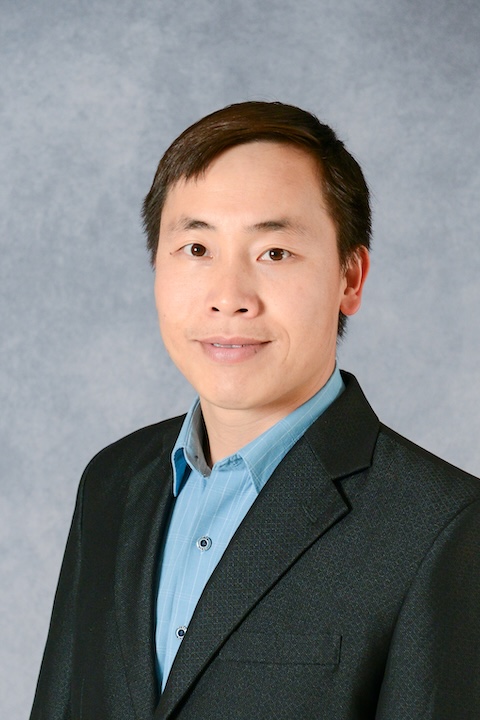
Dr. Huy Phung
Dr. Huy Phung (thầy Huy)
Teaching Assistant Professor of Vietnamese · Dept. of Asian and Middle Eastern Studies

Dr. Huy Phung directs the Vietnamese Language Program, teaching the full course sequence with a task-based, student-centered pedagogy. His scholarship focuses on task-based language teaching and heritage language education.

Office Hours (Drop-in Café ☕) — meet with your instructors, ask questions, and get individualized support on coursework or language learning.
📍 FedEx Global Education Center 4117, UNC Chapel Hill ✉ phunghuy@unc.edu 📷 @uncviet
Hiền-Thanh Nguyễn
Hiền-Thanh Nguyễn
Fulbright Foreign Language Teaching Assistant (FLTA), 2026–2027

Co-teaching this fall and teaching one section of VIET 102 in spring, Hiền-Thanh also leads FLTA stories, crafts, and cultural activities during weekly Office Hours (Drop-in Café).

Program Advisors

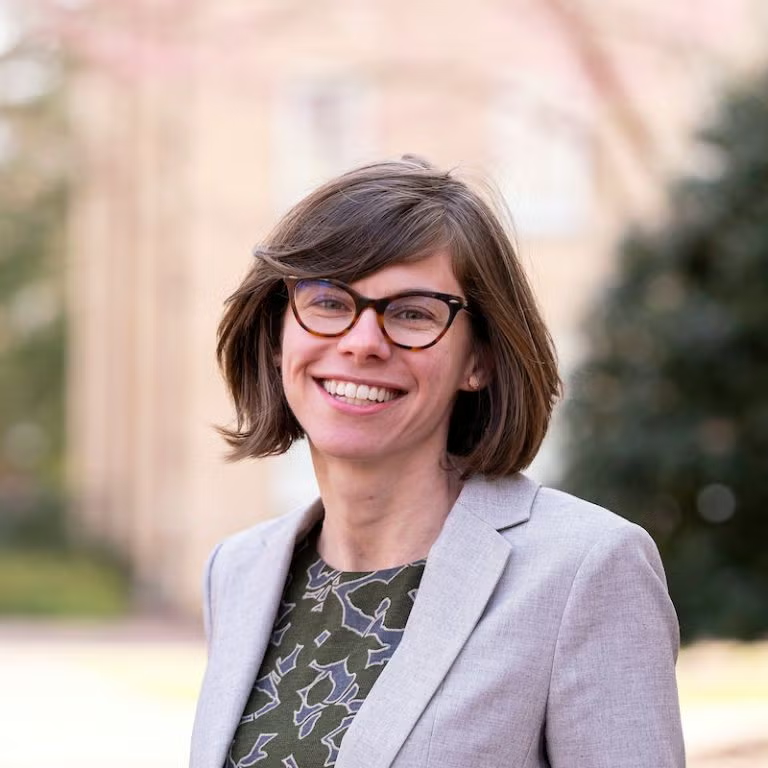
Dr. Becky Butler
Dr. Becky Butler
Assistant Director for Southeast Asia Initiatives, INSITE: Asia

Trained as a theoretical linguist specializing in the phonetics and phonology of mainland Southeast Asian languages, with current research on oral histories among North Carolina's Southeast Asian diaspora communities. Dr. Butler coordinated the 2020–21 pilot that brought Vietnamese instruction back to UNC and co-wrote the Henry Luce Foundation grant that helped establish the program.

Advises the Southeast Asian Studies Minor — VIET 204, 305, 306, and the upcoming VIET/ASIA 324 all count toward it.
Teaches LING/ASIA 260 (Languages of Southeast Asia) and AMST/ASIA 353 (Southeast Asian North Carolina).
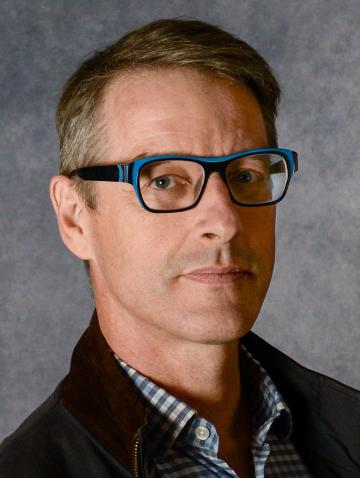
Dr. Christian Lentz
Dr. Christian Lentz
Associate Professor of Geography, UNC Chapel Hill

A geographer and scholar of Vietnam's political and territorial history, author of Contested Territory: Điện Biên Phủ and the Making of Northwest Vietnam. Dr. Lentz backed the 2019 student petition that launched the push for Vietnamese at UNC and serves as Principal Investigator on the $900,000 Henry Luce Foundation grant that helped establish the program.

Teaches GEOG 64 (First-Year Seminar: Vietnam) and GEOG 266 (Society and Environment in Southeast Asia).
Campus Life

Clubs, Events & Community

The Vietnamese program at UNC extends well beyond the classroom — a vibrant network of student organizations, cultural events, and language practice opportunities.

Student & Community Organizations

🏮

UNC VSA

Our closest student-org partner, co-hosting community events, GBMs, and VietNite. @uncvsa

🌏

UNC SEASA

The Southeast Asian Student Association — our regional counterpart to VSA. @uncseasa

🐉

Blue Crescent Lion Dance

Performs energetic lion dances at various events. @bluecrescentld

🗣️

The Vietnamese Circle

Our student-run Vietnamese club, hosting the weekly Language Table and other cultural activities.

🎶

Blue Haven

Student music ensemble; brings live musical and cultural performances to program gatherings. @uncbluehaven

AY 2026–2027 Planned Events

Tết Trung Thu (Mid-Autumn Festival)

Fall semester celebration of the Mid-Autumn Festival — lanterns, mooncakes, and community gathering.

Vietnamese Learning Fest · Nov 13

VIET 101 and VIET 203 students showcase their course projects, alongside music and dance performances.

Vietnamese Folk Games Day

Students and community members come together to play traditional Vietnamese games like ô ăn quan (mancala), bầu cua, and more — a fun cultural immersion open to all.

Tết Celebration & Gathering

Spring semester's annual Lunar New Year celebration featuring bánh tét making, folk games (bầu cua), lì xì decorating, fortune telling with Kiều, and more. Hosted in collaboration with VSA. Read about Tết 2026 →

Vietnamese Culture Connect

Spring event bringing together students of many different identities through language and culture. tinyurl.com/vietcc26 →

Follow @uncviet and @uncvsa for the latest event updates.

Stay connected with the latest events and program news.

Follow @uncviet → DAMES News →
Press & Program History

In the News

From a two-course pilot in 2020 to a full six-course sequence today — how the program's growth has been covered, on campus and beyond.

Lanterns, Lion Dance and Trivia: UNC's Vietnamese Language Program Marks Mid-Autumn Festival for ASIA Week

AMES News · Oct 2026

Recap of the Mid-Autumn Festival celebration during ASIA Week — trivia, games, a shared feast, and a lion dance performance drawing about 40 attendees.

UNC Vietnamese Program Hosts Culture Connect Event

AMES News · May 2026

Coverage of Vietnamese Culture Connect — student research presentations, VIET 102 skits, and a Blue Haven performance drawing students across language backgrounds.

Celebrating Vietnamese Tết 2026 with Hands-On Bánh Tét Workshop and Folk Games

AMES News · Feb 2026

Recap of the Tết 2026 celebration co-hosted with VSA — bánh tét making, folk games, and community gathering.

There and Back Again: The Resurgence of Vietnamese at Carolina in DAMES

AMES News · Jun 2021

Announcing Vietnamese instruction's return to UNC as permanent DAMES courses, tracing the program's history back to Prof. Eric Henry.

Tar Heels connect with Vietnamese language, culture in new program

UNC.edu · Feb 2021

A profile of student Valerie Nguyen and the pilot Vietnamese program, in its first semester of instruction.

Carolina Asia Center and Study Abroad Office Partner to Launch Vietnamese Language Program

UNC Global · Oct 2020

Announcing the partnership that launched the original Vietnamese pilot program, delivered virtually with SOAS.

Study Vietnamese On a New UNC Pilot Program

UNC Geography · Jul 2020

The department announcement that started it all — applications open for the first Vietnamese pilot course at Carolina.

More program news and event recaps.

DAMES News & Events →
Testimonials

Voices & Reflections

Dr. Huy Phung

The question I keep asking is not only what students can do in Vietnamese, but also who students can become through Vietnamese.

— Dr. Huy Phung, Program Coordinator

Student Voices

"I felt that I was really able to connect to parts of my Vietnamese heritage through language and being able to use that newfound knowledge to explore the culture. It made me appreciate the language and its complexities a lot more than I had before."

— VIET 102 student

"I get a lot of practice in the language, and because the class is small, I'm able to foster good relationships with my classmates, which also helps me to learn the language."

— VIET 102 student

"He was a very good professor so he opened us to different traditions, both old and new, and also allowed us to come out of our comfort zone in regards to speaking Vietnamese."

— VIET 102 student

Event Reflections

"What I appreciated most about Vietnamese Culture Connect is how it brought together students with many different identities — Vietnamese language learners, Vietnamese American students, international students from Vietnam, and other students who were simply interested in the event. It was a great example of how Vietnamese language and culture can bring people together to learn from one another."

— Dr. Becky Butler, on Vietnamese Culture Connect 2026

"When I was invited to the Vietnamese Culture Connect event, I expected it to be a social event for students and faculty to know each other. I was surprised by the ingenious integration of academic and social together. Students from different language levels presented their project in Vietnamese — that inspired students in the audience with many questions. I was so happy to see so many musically talented students spontaneously jam and sing together. This event successfully connected all the students and faculty together. This can serve as a model for other language programs."

— Dr. Li-Ling Hsiao, Chair, Dept. of AMES

Learn. Enroll in VIET courses and content courses (taught in English). Attend. Join us at Vietnamese Language Circle, Tết Celebrations, Vietnamese Culture Connect, and other cultural events. Share. Follow @uncviet, tag a friend, spread the word.

The Icon of @uncviet

Our Mascot: Con Trâu

UNC Vietnamese buffalo seal mascot

Con trâu — the water buffalo — is the icon of @uncviet. Like Rameses on the same campus, ours is horned, grounded, and unmistakably itself. Diligent, patient, and communal — the buffalo carries the same qualities as Doing, Becoming, and Belonging, the mission this program lives by.

🌾

The Land

Since the Hùng Kings, the trâu has plowed Vietnam's rice paddies — the living engine behind Vietnam's wet-rice civilization.

✨

The Zodiac

In the Vietnamese zodiac, Sửu (the buffalo) is hardworking, dependable, and calm under pressure — the same qualities it takes to learn a language.

🎨

Đông Hồ Prints

Trâu Sen, a child riding a buffalo through a lotus pond, is an iconic Vietnamese folk-art image.

🕊️

The Sage

Laozi rode a thanh ngưu (blue ox) toward wisdom; in Zen, the ox is the mind itself.

🎬

On Screen

Mùa Len Trâu (2004), Vietnam's Oscar submission, follows the water buffalo through Mekong Delta floods.

🍃

The Craft — Trâu Lá Đa

Fold a jackfruit or banyan leaf into a buffalo, thread a blade of grass through the "neck," and pull — the head nods and calls out nghé ọ. No cost, no instructions — passed down for generations.

"Con trâu là đầu cơ nghiệp."

The water buffalo is the foundation of all prosperity — a well-known Vietnamese proverb. Patient, grounded, and quietly determined: the spirit behind everything we build at @uncviet.

Tools & Links

Resources & Links

Useful starting points for Vietnamese language learning, cultural research, and program information.